Measure for Measure at The Wharf Theatre, Devizes

‘Judge not, that ye be not judged. For with what judgment ye judge, ye shall be judged: and with what measure ye mete, it shall be measured to you again.’ Matthew 7: 1-2

From this and other biblical quotes comes the title and theme of Shakespeare’s play, which was first performed at the court of James 1st on the 26th December 1604.

‘Dealing with hypocrisy in government, the abuse of power and the silencing of women, Measure for Measure is an irresistible choice for a modern-dress production. It has the power, four hundred years on, to genuinely startle us with its relevance.’ Liz Sharman, Director.

I confess to having been quite daunted at the prospect of reviewing a Shakespeare play. I’m all for a long word but there really are rather a lot of them all together and sometimes it’s hard to keep up. In addition to that the parallels with the society of today are many and various and almost too glaringly obvious to mention.

‘Political chicanery. Abuse of position. Misogyny. Lying when in office. Sexual impropriety. Leaders breaking their own rules. No – it’s not Westminster!’ Ian Diddams (Pompey).

I went on Monday, which was the first night of the run. As mentioned above, the cast wore modern dress (with a seventies feel). The stage was painted black and bare; the absence of clutter and decoration on the stage leaving the mind free to concentrate on and relish the richness of the language. With the odd prop and sprinkling of light of different shapes and hues to indicate changes of scene, and music and sound used sparingly to the same end; a little mediaeval here, a bit of classical there, a bit of rock, tolling bells, and birdsong; a sombre atmosphere was created that entirely fitted the subject material.

Duke Vincentio leaves Vienna in the hands of his deputy Angelo, and disguises himself as a monk to observe how Angelo enforces the laws that he himself has let slide over the years, saying ‘hence shall we see, if power change purpose, what our seemers be’. Angelo immediately cracks down and brings back some ancient laws, particularly in relation to brothels and sexual behaviours, and sentences Claudio, the brother of the virtuous aspiring nun Isabella, to death for getting his girlfriend pregnant out of wedlock. When Isabella finds out that Claudio is to die she pleads with Angelo, who is suddenly overpowered with feelings of lust and love and proposes that she save her brother’s life by letting him have his wicked way with her.

It all gets a bit dark at this point and there is a rather disturbing scene in which Angelo tries to dominate Isabella by pulling her hair covering off. ‘To whom should I complain?’ asks Isabella afterwards.

Perhaps it is possible to watch Measure for Measure without being reminded of the murder of Sarah Everard and the policing of subsequent demonstrations, the current situation of women in Iran, and the recent revelations about the low rate of rape convictions in the UK and misogyny within the Met, but I didn’t manage it.

This scene was particularly well acted by Simon Carter as the dour and unforgiving Angelo, and Eleanor Smith in her Wharf debut as the innocent Isabella. Other scenes in which these two excelled in their passionate delivery were the scene in which Angelo is surprised by the suddenness and depth of his feelings, and the scene where Isabella gives Claudio, played by the always watchable Oli Beech, a piece of her mind for suggesting that his life might be worth more than her virtue.

As well as much morality to mull on there is many a mirthful moment in Measure for Measure, mostly delivered by the ebullient Ian Diddams as Pompey Bum the Bawd (resplendent in a gold shirt familiar to his fans) and the magnificent Lesley Scholes as Mistress Overdone, both of whom were made for such roles, and the rather strange Barnadine, who was covered with so much hair I couldn’t tell who played him! I also enjoyed Paul Snook as the crafty Lucio’s wit and word play, and Tor Burt’s gentle delivery of Mariana’s lines. Interesting and thought-provoking characters were Duke Vincentio (described as ‘the old fantastical duke of dark corners’ by Lucio), played in enigmatic and conspiratorial fashion by Pete Wallis, and the Provost, Jessica Bone, who seemed to be the only straightforward and truly merciful representative of the law in the play.

It’s not my place to criticise Shakespeare but at one point someone sleeps with someone pretending to be someone else and because it is dark nobody knows that they are sleeping with the wrong person (the bed trick) and also someone’s head is cut off but it’s not the head of the actual person it’s supposed to be but because they are dead nobody notices (the head trick) and I find both those things completely unlikely but I guess that’s poetic licence for you.

In the end everyone, with perhaps but not necessarily the exception of Isabella, has been taught a lesson about justice and how we shouldn’t be removing specks from each other’s eyes before getting out the planks from our own.

What of Duke Vincentio though? Was he lazy, sneaky, incredibly wise, or all of the above? Because in the end it seemed that he might be just as capable of riding roughshod over a woman’s wishes to satisfy his own desires as anyone else was. Perhaps no-one is all of anything, and Shakespeare leaves us to make up our own minds about him and his final question to Isabella unanswered.

The prose and poetry in the play is glorious, and so much easier to understand in performance than on the page. There are so many chuckleworthy turns of phrase – ‘groping for trouts in a peculiar river’ being one of my favourites – and philosophical and potentially dangerous questions to stimulate and confuse the mind, such as ‘They say, best men are moulded out of faults’, and ‘Might there not be a charity in sin…’.

There have been many words written about Shakespeare and his meanings and motivations over the years, but whatever his intent he has left us in Measure for Measure a play that begs huge moral questions, acknowledges everyone’s fallibility and humanity, and gives you a good laugh to boot.

The Wharf’s production on the first night wasn’t perfect. There were a few lines forgotten for a moment, and it took a while to warm up, but all in all it was very well done by an experienced cast and incredibly engaging. The theatre wasn’t packed but it will be by the end of its run, and I wasn’t the only person to have felt privileged and thrilled to enjoy a bit of Shakespeare in our beautiful theatre.

I asked the people in the row in front of me for a few, well three to be exact, words to describe their experience. ‘Jolly good evening!’ and ‘Thoroughly enjoyed it!’ they said, and on the way out I heard a lady say to her friend with some surprise that she had understood it all.

One has to wonder what the relatively new King James 1st would have thought of being presented with such a stark message about government and morality.

Finally, it’s worth remembering that it wasn’t until 1660 that women were even allowed to be on the stage at all, and that all the women’s parts in the original play would have been played by men.

If you get the chance to see Shakespeare at The Wharf this week or ever in the future, give it a go; you’ll be hugely entertained and supporting quality theatre in Devizes by doing so.

And if you’re less than familiar with the plot of the play or Shakespeare generally there’s no crime in having a quick Google. No-one needs to know. Not that I did or anything…

© Gail Foster 29th March 2023

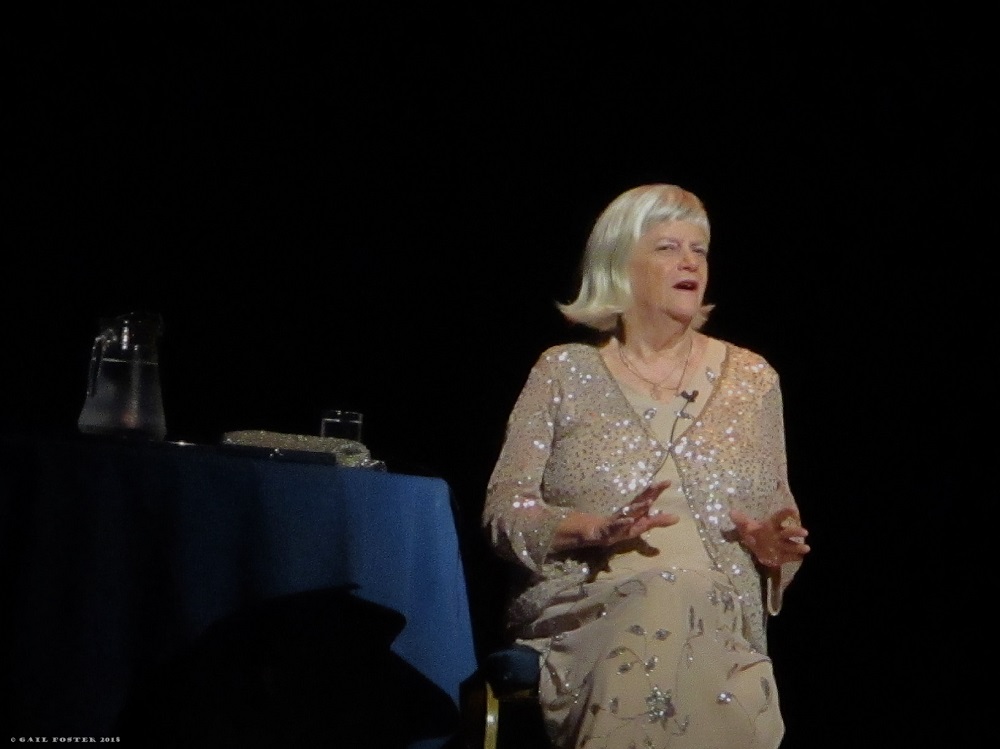
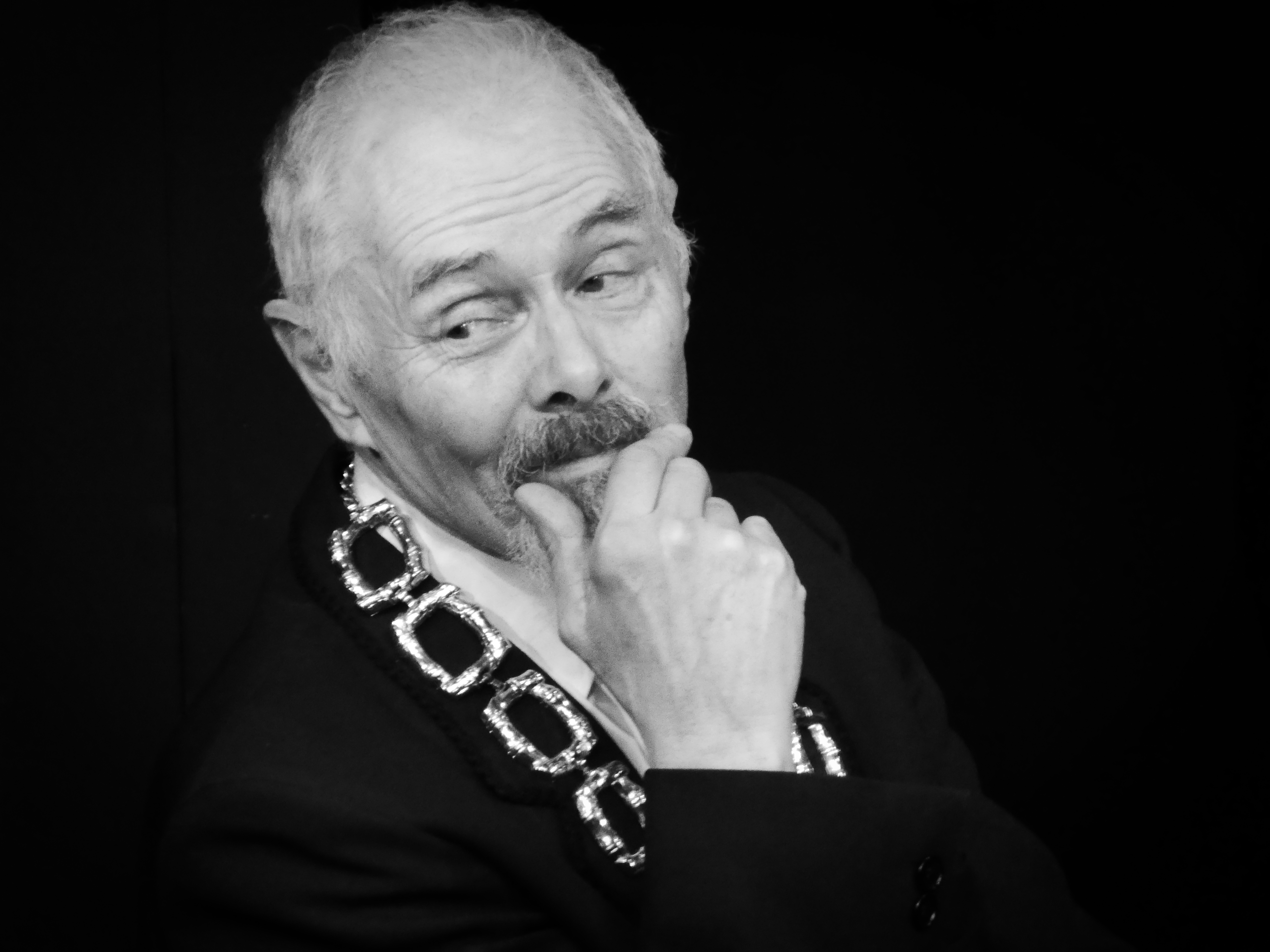
Images of Pete Wallis as Duke Vincentio and Eleanor Smith as Isabella by Gail Foster

Hard Work It Seems Is Not Enough

Work hard, they said, and so I did

Till midnight sometimes and beyond

I read and did as I was bid

Work hard, they said and so I did

I always was that sort of kid

There never was a magic wand

Work hard, they said and so I did

Till midnight sometimes and beyond


Work hard, they said, and so I read

And didn’t go to bed till noon

Believing every word they said

Worked hard until my fingers bled

And all the world was in my head

There never was a silver spoon

Work hard, they said, and so I read

And didn’t go to bed till noon


Work hard, they said, and so I did

And you’ll be what you want to be

No path in life will be forbid

Work hard, they said, and so I did

I always was that sort of kid

But never went to Eton, see

Work hard, they said, and so I did

And you’ll be what you want to be


Work hard, they said. For kids like me

Hard work it seems is not enough

The Bs I need were not to be

Work hard, they said. For kids like me

There is no university

Hey, it’s a hard knock life, kid. Tough

Work hard, they said. For kids like me

Hard work it seems is not enough


© Gail Foster 15th August 2020

So Many More Coffins Than You

There once was a President who
Didn’t give one fuck or two
‘It’s tremendous!’ he said
‘We’ve got so many dead!
And so many more coffins than you!’

There once was a President who
Said that science was simply not true
‘All this talk of a spread
Is all fake news!’ he said
‘What’s that smell?’ he said. ‘That’s the dead.’ ‘Ew.’

There once was a President who
Killed his country. ‘The size of the queue
Of our glorious dead
Is enormous!’ he said
And it was. And it grew. And it grew.

© Gail Foster 28th March 2020


Oh God, It’s The Conservatives

Oh God, it’s the Conservatives
Dear, must we have them round for tea?
They’re such a shifty bunch of spivs
Oh God, it’s the Conservatives
As slimy as and armed with shivs
For stabbing those who disagree
Oh God, it’s the Conservatives
Dear, must we have them round for tea?

Oh God, it’s Johnson and McVey
and Sayid Javid. Quick, the lock!
And Gove and Raab have come to play
Oh God, it’s Johnson and McVey
I’m frightened. Make them go away
Be quiet and ignore the knock
Oh God, it’s Johnson and McVey
and Sayid Javid. Quick, the lock!

Oh God, they’ve seen us. Gove is at
The window waving. Now we’re fucked
Coee! Says Sayid. Rat a tat!
Oh God they’ve seen us. Gove is at
The door with Andrea, and that
Is Johnson with his shirt untucked
Oh God, they’ve seen us. Gove is at
The window waving. Now we’re fucked

Oh God, it’s the Conservatives
Too late to stop them coming in
And cutting lines up with their shivs
Oh God, it’s the Conservatives
All bullshit and superlatives
Lock up your daughters and the gin
Oh God, it’s the Conservatives
Too late to stop them coming in

© Gail Foster 11th June 2019

John Simpson at Devizes Arts Festival

P1140708

John Simpson at the Corn Exchange, Friday 31st May

One would expect a reporter of John Simpson’s standing and experience to be very careful and specific with his choice of words.

Simpson has been with the BBC for 52 years and has reported on 47 wars.  He is a man whose words are to be listened to, and on Friday night a packed house at the Corn Exchange were curious and enthusiastic to hear what he had to say and ask him questions about his long career and the state of the world as we know it today.

The man is all bon homie and old school decency, and one suspects that his affability and fair manner have got him out of many a sticky situation.  He starts off light, laughing about being punched on his first day on the job and being mistaken for David Attenborough, and chatting about family.  He has a book to promote but avoids saying much about that at all.

He talks about the BBC, saying that these days there is opposition from all sides towards the organisation and that he’s never been told to tone it down in all the years he has worked for them.  He talks about Trump, his ‘habit of tweeting insanities’ and strategy of giving away positions and key elements before presenting final agreements as amazing victories.  He’s disappointed that the 30th anniversary of the Tiananmen Square protests will be overshadowed by Trump’s visit to the UK. He says that Gaddafi was off his head, that Saddam Hussein scared him, and that al-Bashir was weak and wanted to be liked.  He liked Thatcher, although ‘When she was good she was very very good and when she was bad she was something else’. He says that Mandela treated people as the best version of themselves and waxes lyrical about his admiration for Václav Havel. He acknowledges that China is to be taken very seriously indeed and thinks that the best strategy is to keep it in play.  China is, says Simpson, surprisingly open and anxious to be part of the international community.

He saves his most emotive words for how he feels about Britain today. ‘The line of confrontation’ he says, ‘is very disturbing indeed’. He compares the UK to France in the 50s, which was, he says ‘extraordinarily violent’.  He says that there is a ‘vicious divide which stirs up the weakest intellects’.  He talks about the ‘disgraceful’ messages that his colleague Laura Kuenssberg gets on social media and says that he holds social media responsible for the current ‘nastiness and violence’, for which he gets a round of applause.  He refers to ‘disturbing threats to freedom’ and says that he feels more able to talk freely about other countries than our own these days.  He’s dismayed to see our reputation plummet in the eyes of the world.  ‘It’s painful to find that Britain has become an international joke’ and ‘It’s important to realise the way we’ve damaged our country’.

He wonders if Brexit was ‘the tinder that started the whole performance’ but stops short of apportioning blame to any particular entity. ‘This Brexit business is going to change things’ he says sadly, wishing that we could be ‘back the way we were before all this started’.

There are points where Simpson catches himself just before he falls into an abyss of pessimism and says something about hope.  He does, after all, have a young son to be optimistic for.  Terrorism is 7 or 8% of what it was in the seventies, he says, and a billion have been lifted out of poverty in the past 13 years.  But when it comes to Britain he struggles to find any positives at all, and this from a man like Simpson is disturbing.  ‘We need to try and be less divisive ourselves and more accepting of other points of view’, he says, wishing for the best but sounding as if he is whistling in the wind.

He sticks rigidly to his three-quarter hour talk and fifteen-minute Q&A plan, but then he didn’t get where he is today by faffing about.  Those who wanted endless war stories are disappointed, but those who wanted his views on current situations are not.  He signs books afterwards and is very approachable.

I ask people what they thought of the great man. ‘His description of Mandela – it revealed that what we all hoped to be true of him actually was’ says one audience member.  ‘Honest’, ‘Genuine’, ‘Empowering’, and ‘Awe-inspiring’, say others.  ‘I was sitting there thinking what have I done with my life’ says my friend. The general feeling is that it has been a privilege to hear John Simpson speak, and that people have been delighted by his wit.

And then off he goes, with shrapnel in his side and a shard of hope in his heart, to his next adventure.

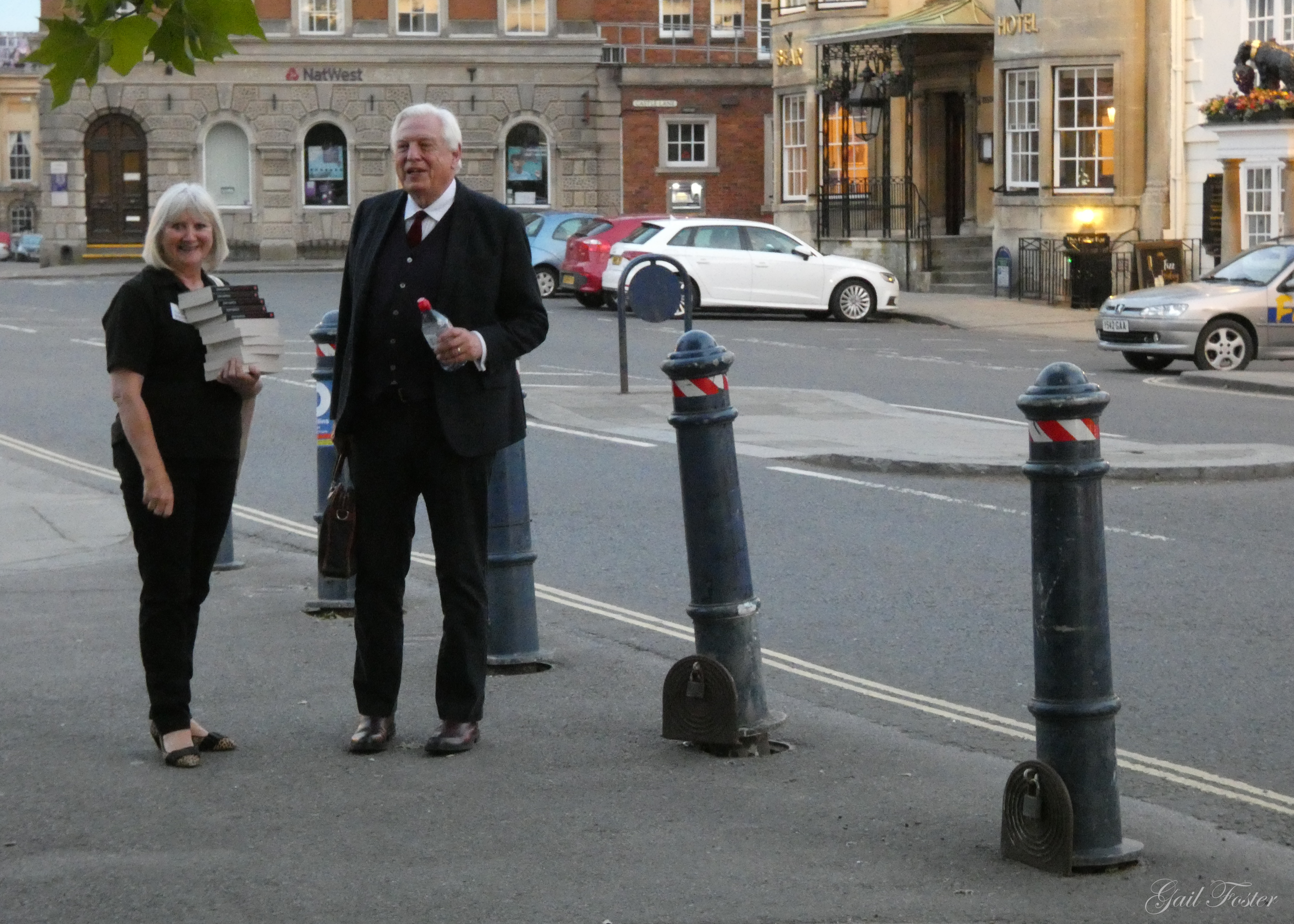
In the Market Place I take a picture of him smiling.

© Gail Foster 3rd June 2019

P1140930

Brexit Backstab Bitchfest

*

There once was a government who

Were divided and hadn’t a clue

How to manage the exit

From Europe and Brexit

You first. Oh no, after you.

There once was a government who

Were at war.  It was blue upon blue

As they edged down the halls

With their backs to the walls

You first.  Oh no, after you.

There once was a government who

Were divided and nobody knew

What to do, so they bitched

And they backstabbed and stitched

Up each other.  You first.  After you.

*

© Gail Foster 12th September 2018

Ann Widdecombe at the Corn Exchange, Devizes; a review

IMG_0171 - Copy

Ann Widdecombe at the Devizes Arts Festival

On Thursday night, the Devizes Arts Festival kicked off with ‘An Audience with Ann Widdecombe.’

Ann is famous for her 23-year career in Parliament, her appearance in Strictly Come Dancing, and her right wing Victorian views.

In her rider she has asked for a glass of water and a sandwich.

She arrives on time, sporting a rather fashionable mustard coloured jumper.  It is immediately apparent that she is not up for wasting syllables on irrelevant chat.  She’s come to do the job, and flog some books, and entertain.  ‘She’s dead professional’ says one of the new boys at the Town Hall, as we watch her cracking on with the soundcheck.

The doors open to the public, and Ann appears, dressed as a Victorian opera singer.  The effect of the light catching her ash blonde hair and sequins is startling.

She’s up for signing books before and after the show, and in the interval.  She’s written seven; five fiction, including a self-published detective novel, one autobiography, and a religious book about penance.   She’s polite with the public.  She makes herself accessible.  She’s happy to have photos taken, happy to be in selfies, happy to nip upstairs for a random appearance on Fantasy Radio.  She’s a good sport when something goes wrong (don’t ask).  ‘Always see the funny side’ she says.  Phew.  But she’s not touchy feely at all (and why should she be?).  She’s brisk, and formal.  And there’s something of the…what about her?

Ann is, on stage, quite funny.  ‘Do blondes have more fun?  All I can say is that I noticed men were talking to me much-more-slowly’ she quips.  She kicks off with talking about her recent celebrity appearances, or ‘non-political television’, as she calls it.  She doesn’t do social media.  Television is, in her view, still a good way of reaching the masses.

When Ann left Parliament in 2010, she drew a line.  She was an ‘Admiralty child’.

‘The subconscious lesson of that childhood,’ she says, explaining how she moved from school to school, constantly having to make new friends, ‘was that when something’s gone, it’s gone.’

‘The day I left Parliament,’ she says, ‘I realised that I no longer owed anyone any duty of time and dignity.’

Friends warned her off Strictly, worried that if she did it she would lose her gravitas.

‘What would I want it for?’ says Ann.

Ann does panto these days and has worked with Basil Brush.  She disagrees with hunting, doesn’t agree with abortion, and is in favour of the death penalty.  She’s said Yes to Graham Norton, and No to Jonathan Ross.  She seems a bit thick with Anton from Strictly.  ‘The less time you spend with your feet on the floor the better’ – Anton.  People laugh a lot.

After the interval, a cheeky glass of water and some more book signing, Ann returns for a Q&A.  Questions are, in the main, unchallenging.  Would you pay £16 to heckle Ann Widdecombe?  Probably not.  This is the meat and bones of Ann’s talk for me, and probably for the lady outside who said ‘She’s brilliant, erudite, and feisty, but I don’t feel she’s giving her best, and I’m really not that interested in Big Brother.’

Ann answers all the questions.  Sort of.  She’s up for it, that’s for sure.  Assertive is the word.

She blames the closure of libraries on the internet.  Margaret Thatcher was, while Ann had huge respect for her, ‘a bit remote’.  She talks about her memories of Thatcher and Major walking through the lobbies, how the Red Sea parted for Thatcher whilst Major would stop and have a friendly chat.  She has a Ten Commandments story.  She thinks the quality of MPs in Parliament has gone down due to selection procedures, and that governments suffer from oppositions taking opposition habits into government, and governments taking government habits onto the opposition benches.  She voted for Brexit.  She says she said the ‘something of the night about him’ thing to a couple of people and it just caught on.  She really doesn’t agree with abortion and thinks that there is divisive political skullduggery going on in relation to the issue.  She has always been comfortable with herself.  50 Shades of Grey is ‘quite the dirtiest book I haven’t quite read’.  She had 800 people on her Christmas list when she was in Parliament.  Ann talks about changing demands on the NHS in relation to new scientific medical discoveries, and how Bevan’s original vision is out of odds with the current demand for services.

‘What would we want the NHS to look like if we started it from scratch?’ she asks.

A bit more book signing and ‘bon homie’, and Ann is ready for the off.  People have enjoyed her, and if they didn’t they kept their opinions to themselves.  She’s done everything she signed up for.  She didn’t eat the sandwiches.

‘Good luck with your Festival!’ she says, as she walks out the door.

Something of the…what about her?

Something of the Right, obviously.  But also something I can’t quite put my finger on.

Ann is working it, and good luck to her.  The woman has balls, even if her views are objectionable.  She answers to no-one.  She’s a good speaker.  She’s intelligent.  There are things to admire about her, for sure.  But she is a bit odd.  A bit chilly.  There’s a wall around her.  Maybe you have to build such walls when you are a child being moved from pillar to post, or when you are trying to hold your own as a woman in Parliament, or when you have your knickers showing in the celebrity spotlight.

Who can say.

© Gail Foster 1st June 2018

Iolanthe; the White Horse Opera at Lavington School

a first night review…

*

I was delighted to be asked to review the White Horse Opera’s production of Gilbert and Sullivan’s comic opera, Iolanthe, at Lavington School this week.  Delighted, but slightly nervous.  Opera, or operetta, apart from a brief flirtation with The Yeoman of the Guard in my youth, isn’t my cup of tea.  But I’m up for a challenge, and it really was about time I popped my White Horse Opera cherry.

I looked it up online and what I read tickled me.  Fairies and the House of Lords.  Bit of magic and a bit of satire.  Interesting.

First performed in London in 1882, Iolanthe, also known as ‘The Peer And The Peri’, took a mischievous jab at the high society of the time in this bizarre tale of a Fairy who has been banished for wedding a mortal, Strephon her son, a half-man, half-fairy sort of bloke, Phyllis, the mortal object of his (and everyone else’s) affections, various vociferous Fairies; a conflicted Lord Chancellor;  and assorted beery leery Peers.

Phyllis reciprocates Strephon’s love, but the Lord Chancellor, even though he is her legal guardian, also has his eye on her, and forbids Strephon from marrying her.  When Phyllis catches Strephon talking to Iolanthe about the situation and mistakes the ever youthful Fairy for a lover, she rejects him and says that she will marry a Peer.  The Fairy Queen and her crew, unimpressed with the Lord Chancellor and the Peers, put Strephon into Parliament and give him the power to pass any bill he likes…

It’s all a bit tricky really, what with the law about Fairies marrying mortals being punishable by death, the Lord Chancellor’s paradoxical legal dilemma, the state of the political nation, forbidden desires, cosmic compromises, and everyone falling in love with everyone else.  One could get quite deep about it, even (it’s his bottom half that’s mortal, by the way, in case you were wondering), what with all those rampant Fairies and randy Lords, Pagans and the Establishment, intellectual conflicts, ancient energies in tension, and stuff…

Or one could just enjoy a jolly good romp.  So to speak.

Well directed by Graham Billing, with superb musical direction by Roland Melia, the show was visually and aurally gripping from the outset.  The orchestra was tight and melodious throughout.  The acoustics were great (how mellow was that cello!).  The scenery, consisting of a screen backdrop of a flowing stream and a static image of the Houses of Parliament, was simple but effective.  The fairy dresses and butterfly wings were pretty, the Peers looked authentic, and the choreography was energetic.  It was, with the exception of a couple of minor hesitations, pretty slick for a first night.

A few voices stuck out a mile; Phyllis’s (Lisa House) beautiful soaring soprano, Lord Mountarat’s (Matt Dauncey) confident baritone, Iolanthe’s (Paula Boyagis) sweet mezzo-soprano, and Private Willis’s (Charles Leeming) sonorous bass.  Phyllis and Strephon’s (Jon Paget) duet ‘None Shall Part Us From Each Other’, and the Peers’ robust entry with ‘Loudly Let The Trumpet Bray’, got the old goosebumps going good and proper, and I couldn’t fault the whole cast harmonies.

As far as the acting went, good performances all round, but special mention to Matt Dauncey and Jon Paget again, Chrissie Higgs as the feisty Leila and Jessica Phillips as Celia, and Sue Goodman as the scary and imposing Queen of the Fairies.  Oh, and all of the Peers, who were truly amusing, delivered some delicious little cameos, played every moment with gusto, and ripped the Michael out of the aristocracy beautifully.

I’d like to have seen little more evidence of eternal youth and a tad more spring in the step of the Fairy ranks at times.  And a couple of voices took a while to warm up, or sounded better in some songs than others.   Stephen Grimshaw as the Lord Chancellor and Dennis Carter as Lord Tolloller impressed more in the second act, with Grimshaw nailing the complicated patter song ‘Love, Unrequited, Robs Me Of My Rest’, and Carter seeming more comfortable as time went on.

Picky, really, but had to be said.  Small spots of imperfection in an otherwise impeccable show that will doubtless be ironed out by Saturday.

I loved this show.  I spent much of the evening tapping my foot and smiling.  It was lively and engaging from the moment the orchestra struck their first chord.  You know a show’s been good when you haven’t taken your eyes off the stage or thought about domestic trivia for the entire length of it.  The ensemble pieces were well executed and fun to watch, the comic timing was spot on all round, and the sound was full and satisfying.

I enjoyed the surprise of the current political references, and the relevance of the story to the present day.  The visual spectacle.  The rollicking ride.  The glorious flighty flirtiness of it all.  And the stuff about the law and the lore.  What’s in a word, eh?  The lives of men and fairies, according to Gilbert and Sullivan.

(Interesting Iolanthe fact; fairy lights first appeared in the form of the battery operated star shaped lights worn in the hair of Iolanthe’s fairies in the first year of its run).

Iolanthe is an odd, thought-provoking opera about sex and politics that comes heavily disguised as a sparkly frivolous thing.  I reckon the production team and experienced cast of the White Horse Opera did it more than justice.  It exceeded my expectations, and I enjoyed popping my opera cherry very much.  How lucky are we to have quality opera like this out in the wilds of Wiltshire?

Therefore, even though I did say once that I never wanted to see Ian Diddams in a onesie and the Muppets were a tad incongruous, I’m giving Iolanthe…

drum roll…

Eight out of ten.

© Gail Foster 13th October 2017

Cosmic Micturation

On the alleged predilictions of Donald Trump

*

I wonder if, at Trump’s inauguration

There will be rain, some cosmic micturation

Anointing him with seedy sacred powers

In shimmered falls of blesséd golden showers

I wonder if America will see

An asset or a liability

In Trump, a man who likes to pay a whore

To do a pretty penny on the floor

I wonder if the world will froth and frown

Or take it on the chin, and lying down

Be sure the satirists will shoot their stings

‘Urine the Whitehouse now’, and sharper things

Some folk may whisper ‘Nothing new in this’

A President who likes to take the piss

What matter if the man’s a tad perverse

It could be sheep, or shit, or something worse

Oh, Bling New World, that suddenly we see

Run by a man who likes to play with wee

Hand on the button, fingers in the pot

America, you’d better like it hot

*

© Gail Foster 11th January 2017

‘Smoke and Roses’ and ‘Takin’ the Pith’

This week I published two books, which are available on Amazon and through Devizes Books

*

The first, ‘Smoke and Roses’  is saucy, serious, and sweet, and the second, ‘Takin’ the Pith’, does exactly what it says on the tin.

I guess that ‘Smoke and Roses’ is my mythology.

Both contain poems and prose in different forms, and the language is edgy in both.

There will be some content that you have not read.

I hope you like them.

Thank you so much for your interest.

Gail